The Supreme Court heard arguments Wednesday on whether the Trump administration can terminate humanitarian protections for thousands of Haitian and Syrian immigrants without court oversight, with conservative justices appearing doubtful of the legal challenge.
Solicitor General D. John Sauer told the court that Congress gave the Homeland Security Secretary "unreviewable discretion" to end Temporary Protected Status designations. He warned that allowing judicial review would lead to "judicial micromanagement" of foreign policy decisions that belong to the political branches.
"Congress balanced the risk there might be some decision that's erroneous or baseless… that would evade judicial review, against the risk of what we're living through here, which is judicial micromanagement of the sorts of foreign policy laden in determinations and decisions that are naturally conferred upon the political branches," Sauer argued.
Attorneys for the TPS holders pushed back, arguing the Homeland Security Secretary must follow "procedural guardrails" set by Congress — including reviewing country conditions, consulting other agencies, and providing 60 days notice before termination.
"The bottom line is the secretary can terminate TPS, but he must turn square corners and follow the rules Congress set," said attorney Ahilan T. Arulanantham. "The government reads the statute like a blank check today. They want to use it to expel non-citizens, but the power that they seek is a double-edged sword."
Justice Amy Coney Barrett questioned whether the procedural requirements matter if the administration can still cancel protections after completing what she called a "box-checking exercise." She asked why Congress would permit review of procedural steps when "really what everybody cares about much more is the substance."
Arulanantham responded that "Congress and us too, and the millions of people who live with TPS holders, have some faith in government, and they believe that if there is consultation, the decisions will be better."
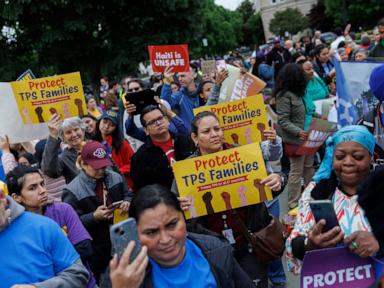
The case centers on the Trump administration's decision to end protections that shield immigrants from deportation to countries facing armed conflict, natural disasters, or other extraordinary circumstances. TPS currently protects roughly 700,000 immigrants from about a dozen countries.
Sauer claimed the administration fulfilled procedural requirements by "seeking input" from the State Department, though he argued even those basic steps weren't legally required. He suggested the secretary could post a notice on social media platform X saying "I hereby terminate Syria's TPS program effective tomorrow" without facing judicial review.
The arguments came as part of a busy day at the court, which also heard a separate case about the Voting Rights Act that overshadowed the immigration debate. The TPS case represents a test of executive power over immigration policy and whether courts can review the procedural steps agencies take when making major policy changes.
A ruling favoring the Trump administration would give future presidents broad authority to end humanitarian protections with minimal procedural requirements. A decision against the government could require more thorough agency review processes and open the door for courts to scrutinize immigration policy changes. The court is expected to issue its decision by summer.