After months of strikes, missile attacks and disrupted energy shipments, diplomacy may finally be gaining ground in the conflict between the United States and Iran. However, the agreement currently taking shape may not produce the clear American victory Washington once envisioned.
Instead, negotiations over the Strait of Hormuz could leave Iran with greater control over one of the world’s most important waterways.
Iran and Oman have reportedly reached an understanding on the geographical coordinates of a proposed shipping route through the strait. Iranian officials said the discussions had been constructive and that a joint announcement was being prepared. However, they also cautioned that agreeing on a route would not automatically guarantee the safety or security of commercial shipping.
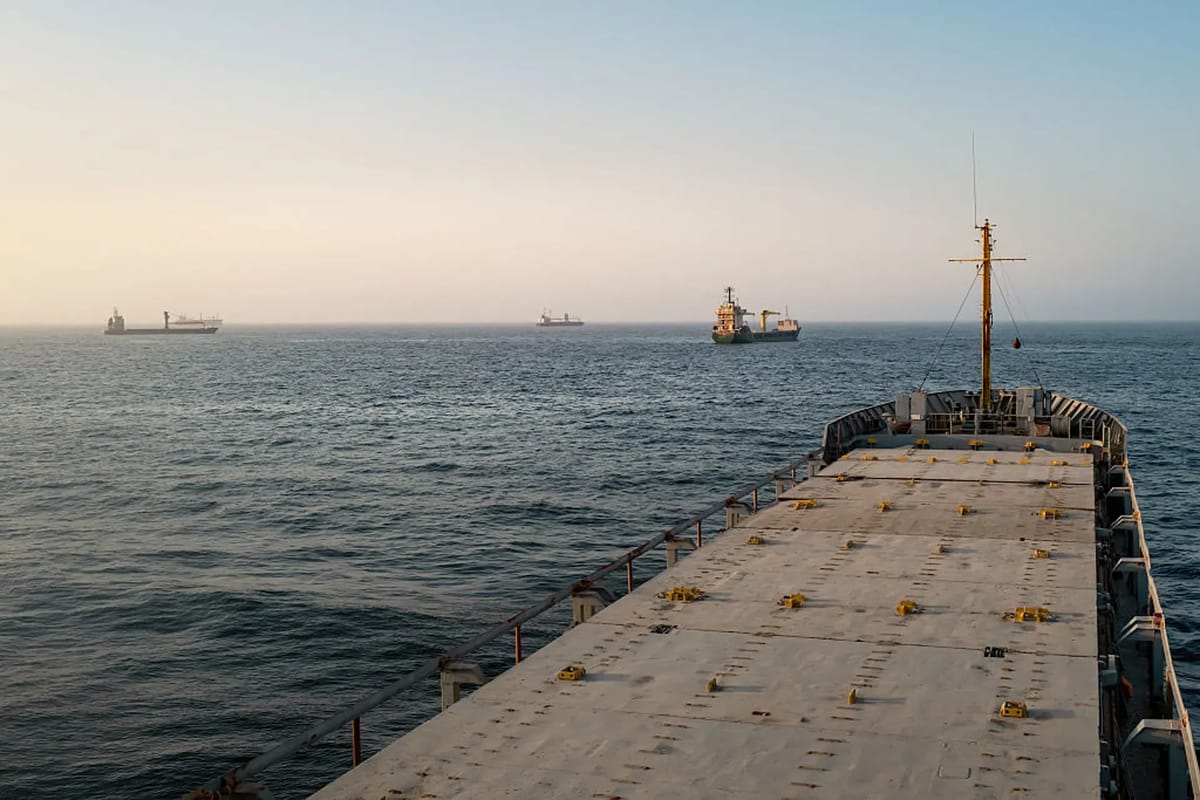
The Strait of Hormuz connects the Gulf to the Arabian Sea. Before the war, approximately one-fifth of global oil and liquefied natural gas supplies traveled through the waterway. At its narrowest point, the strait is only about 21 miles wide, with separate shipping lanes measuring roughly two miles in each direction.
Control of those lanes has become one of the most difficult issues in negotiations.
Under proposals reportedly being discussed, Iran would control or supervise vessels entering the Gulf, while Oman could play a larger role in managing outbound traffic. Iran has also reportedly sought fees of between 5 and 7 percent on cargo passing through the strait. Oman has proposed a lower rate, while the United States has opposed mandatory transit fees entirely.
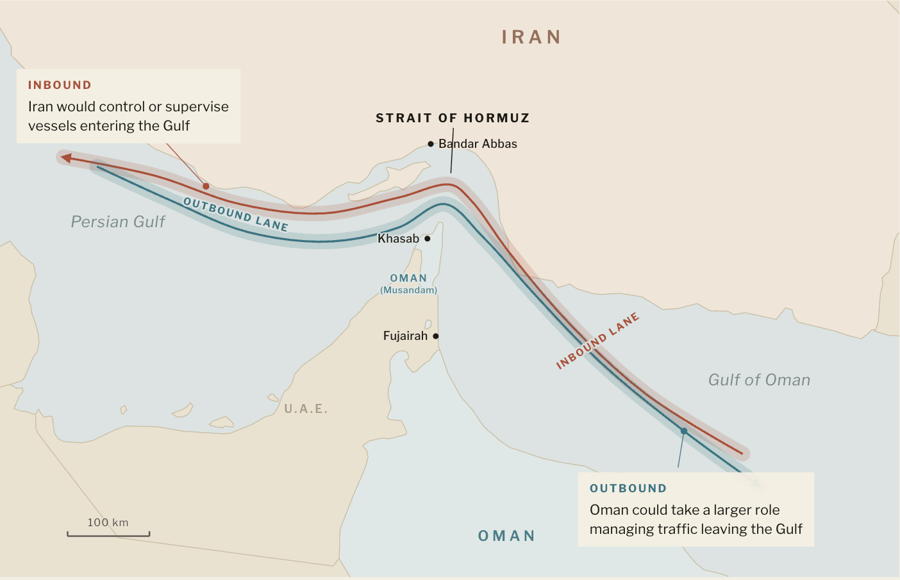
Before the conflict, ships generally passed through the strait under an internationally recognized traffic-separation system. Giving Tehran formal authority over inbound vessels would therefore represent a major change from the prewar arrangement.
For Iran, such an agreement could be presented domestically as a strategic victory. Despite months of American and Israeli strikes, Tehran may emerge with international recognition of its influence over Gulf shipping.
For the United States, the political message would be more complicated. Washington entered the conflict seeking to prevent Iran from obtaining a nuclear weapon, protect commercial navigation and weaken Tehran’s ability to threaten neighboring countries. An agreement granting Iran greater authority over Hormuz could end the immediate crisis, but it could also appear to reward the pressure campaign that created it.
That pressure has extended beyond the strait.
Iran reportedly warned Gulf governments that renewed American attacks against Iranian territory could lead to retaliation against oil facilities, refineries, electricity networks, water infrastructure and transportation systems across the region. The warnings were reportedly communicated through countries including Saudi Arabia, Qatar, Turkey and Pakistan.
These threats appear designed to accomplish more than simple deterrence. Iran is attempting to convince Gulf countries that another American attack would place their economies and populations directly at risk. In doing so, Tehran is turning US partners into diplomatic intermediaries capable of pressuring Washington to avoid escalation.
Saudi Arabia has urged the United States to continue negotiations while also warning that it would defend itself if attacked. Other Gulf governments have similarly supported diplomacy, not necessarily because they trust Iran, but because they understand how vulnerable their oil terminals, desalination facilities and power grids would be during a larger regional war.
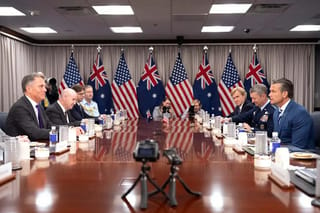
President Donald Trump has repeatedly expressed optimism about the negotiations and postponed additional military action to provide more time for diplomacy. Secretary of State Marco Rubio has also acknowledged progress while emphasizing that no final agreement has been reached.
Iran, however, maintains that it is negotiating with Oman rather than directly with the United States.
Both descriptions may contain part of the truth. Oman and other Gulf states appear to be carrying messages between Washington and Tehran, allowing the United States to describe the process as negotiations while Iran continues to deny participating in formal direct talks.
Even if a maritime agreement is announced, critical questions will remain.
Who will inspect ships? Can Iran deny passage to vessels connected to the United States or Israel? Will transit payments be voluntary or mandatory? What happens if Oman and Iran disagree? Will the United States end its blockade? Most importantly, will an arrangement covering Hormuz lead to a broader ceasefire, or will it merely create a temporary shipping corridor while the war continues elsewhere?
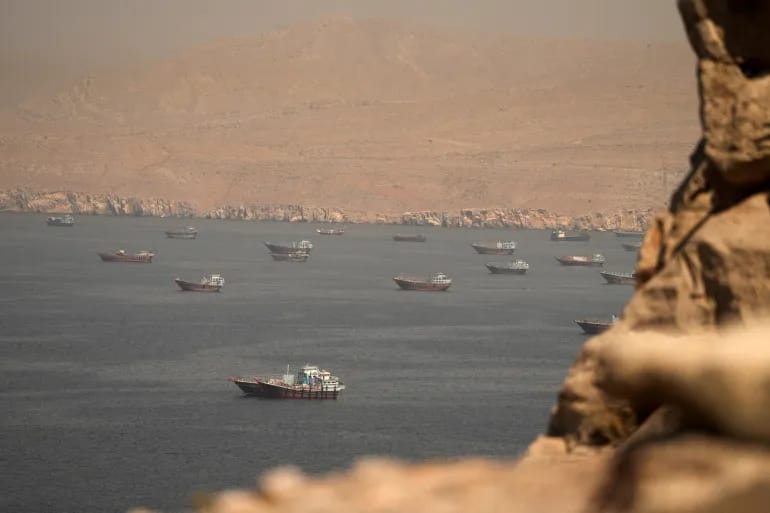
The reopening of the strait should therefore be measured by actual results, not political announcements. A successful agreement would produce regular commercial traffic, lower maritime insurance costs, restored Gulf exports and a sustained halt in attacks. Until those changes occur, claims that peace is imminent should be treated carefully.
My prediction is that Iran and Oman will announce a limited agreement that allows more ships to pass through the Strait of Hormuz, but it will not immediately produce a comprehensive US-Iran peace deal. Iran will accept enough restrictions to prevent another major American attack, while preserving some form of control over inbound traffic. The United States will present the agreement as the restoration of freedom of navigation, and Iran will present the same agreement as recognition of its regional authority. The fighting may pause, but the underlying dispute will remain. Unless the final terms include independent enforcement and clear protections for all commercial vessels, this agreement will not end the conflict. It will simply move the confrontation from the battlefield to the negotiating table.