Rubio Hosts First Israel-Lebanon Talks in 30 Years, Hezbollah Excluded
Secretary of State Marco Rubio hosted historic direct talks between Israeli and Lebanese diplomats in Washington, but ceasefire talks were off limits.
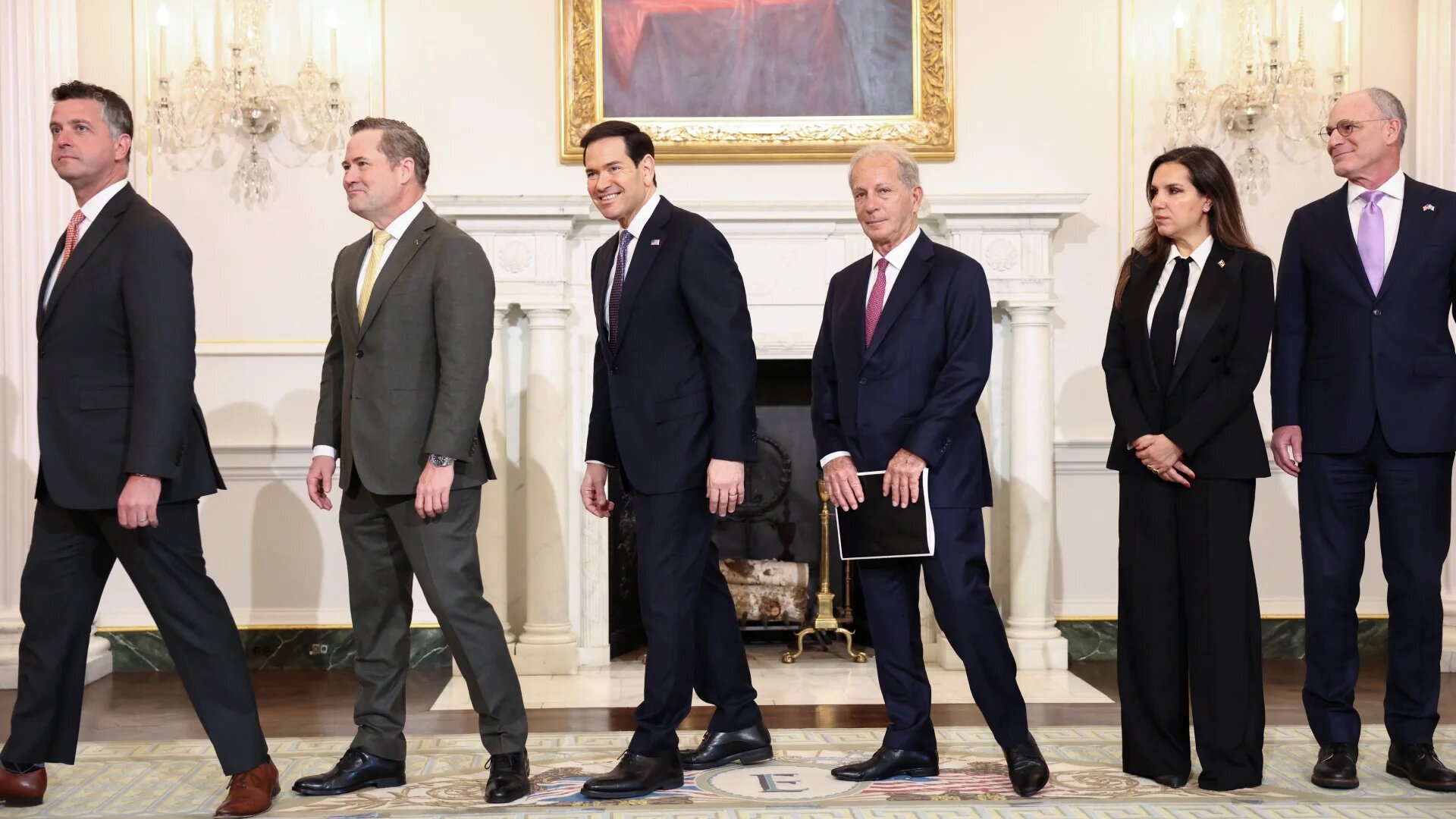
Secretary of State Marco Rubio hosted the first direct diplomatic talks between Israel and Lebanon in more than three decades Tuesday, but explicitly ruled out ceasefire negotiations and excluded Hezbollah from the Washington meeting.
The Trump administration billed the session as "exploratory" talks between the two nations' top diplomats. Lebanese officials arrived with severely limited negotiating authority since Hezbollah — the country's dominant military force and a parliamentary faction — had no representation at the table.
"I know some of you were shouting questions about a ceasefire," Rubio told reporters after the meeting. "This is a lot more than just about that. This is about bringing a permanent end to 20 or 30 years of Hezbollah's influence in this part of the world and the - not just the damage that it's inflicted on Israel - [but] the damage that it's inflicted on the Lebanese people."
The United States designated Hezbollah a foreign terrorist organization in 1997, but the Iran-backed group maintains the strongest military capability in Lebanon and holds seats in parliament. Hezbollah formed in 1982 explicitly to counter Israeli occupation and influence in Lebanese territory.
The diplomatic initiative comes as Trump administration officials work to reshape Middle East security arrangements following recent Iran ceasefire developments. For American taxpayers, reducing Hezbollah's regional influence could decrease long-term military aid requirements and stabilize energy markets.
Lebanon's weak central government has struggled for years to assert control over Hezbollah's armed wing, which operates independently of state security forces. This power imbalance left Lebanese negotiators in Washington unable to make binding commitments on key security issues that would require Hezbollah's cooperation.
The talks represent the most significant direct diplomatic engagement between the neighbors since the 1990s, when previous peace negotiations stalled over territorial disputes and security arrangements. Both countries maintain active border tensions and competing claims over maritime boundaries.
Watch for follow-up meetings in coming weeks as Rubio's team gauges whether Lebanon's government can deliver meaningful commitments without Hezbollah backing.